Fertility
Fertility
Assessing delayed fertility can seem a rather daunting and complicated process, but it essentially comprises of checking 3 parameters:
- Whether there is ovulation (i.e – the ovary is producing “eggs”)
- Whether there is enough sperm to fertilise
- That route for the sperm to travel to the ovary is not blocked (i.e the Fallopian tubes)
Occasionally, there are issues with fibroids or polyps distorting the cavity of the womb, but these will be addressed individually.
Ovulation Tests
Home ovulation tests are not recommended by NICE (National Institute of Clinical Excellence) as they can be inaccurate and can place a lot of stress on couples trying to get pregnant. Most ladies who have a regular period tend to ovulate on a regular basis. A blood test might be recommended to check for ovulation in the second half of the monthly cycle.
Semen (Sperm) Analysis
A semen analysis will be recommended. It’s a vital part of fertility investigation even if the male partner has children. Sperm count and quality can change over time so a recent semen analysis is important.
Checking the Fallopian Tubes
There are several ways to check if the Fallopian tubes are working. A hysterosalpingogram (or HSG for short) uses X ray and a special dye injected through the cervix. Some centres use ultrasound and inject saline through the cervix. In some instances, when laparoscopic (key-hole) surgery is needed to treat ovarian cysts or endometriosis, a blue dye can be injected into the womb during the procedure to check the Fallopian tubes.

An ultrasound scan might also be needed to rule out fibroids or a polyp distorting the cavity of the womb, or any ovarian masses/cyst.
Fertility Treatment
Conditions where ovulation is not regular (like polycystic ovarian syndrome or PCOS) can be treated by drugs to increase or encourage ovulation such as Clomiphene Citrate (Clomid) or Letrozole. These are usually given for a maximum of six cycles as there is evidence to link them to ovarian cancer later in life if used for longer.
Male factor infertility, where repeated sperm analysis is reduced in quantity and/or quality, is usually treated by In Vitro Fertilisation (IVF) or Intracytoplasmic Sperm Injection (ICSI) (see below).
Most ladies with both Fallopian tubes blocked will benefit from IVF. In some instances, however, they can undergo laparoscopic (key-hole) surgery to remove the tubal blockage. Your surgeon will discuss the success rates and complications of tubal surgery with you. Ladies who have undergone clip sterilisation may also have the sterilisation reversed through laparoscopic surgery.
Some ladies might need to have surgery to remove fibroids/polyps/ovarian cysts in order to improve their fertility chances.
About 1 in 4 couples will have completely normal investigations and are therefore classed as suffering from Unexplained Infertility. NICE recommends that these couples are also referred to IVF.
IVF and ICSI
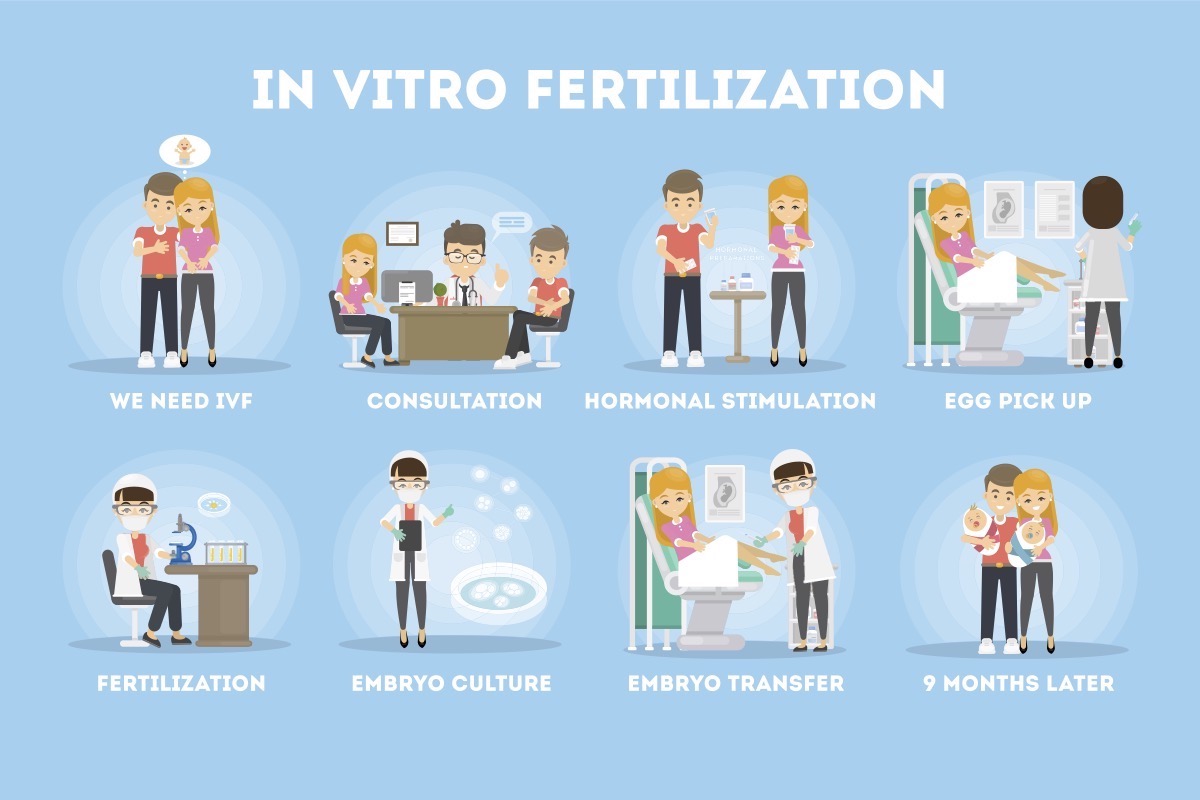
In Vitro Fertilisation (IVF) is a process where eggs are retrieved after hormone stimulation of the ovaries to produce multiple “eggs”. These will be incubated with the partner’s sperm to achieve fertilisation and the resulting embryo will be transferred back into the womb. When there are multiple embryos, these can be frozen to be used in subsequent cycles. Please refer to the image below.
Intracytoplasmic Sperm Injection (ICSI) is a technique where a single sperm is injected directly into an ovum (egg) under a microscope using a micro-injector. This is useful in cases of male factor infertility.
A local IVF centre will be recommended to you if you require a referral.